It would really help me out if you could stop being so sexy. Seriously. You know the people I'm talking about. It's those people who are just so goddamned sexy/hot/attractive who walk around nonchalantly, explicitly exhibiting their natural beauty, being super distracting.
Is it not wholly satisfying enough for you to just be hot? Do you have to cause me to lose a few precious seconds as I do a double-take? It would also be uber helpful if you could always sit toward the back of the class (preferably completely behind me) so that my eyes don't just naturally drift toward you and your kind. Even better, it would be extremely helpful if when you go out to walk around and shop, walk, or whatever, that you slather your face in grease and wear mismatched clothes so as to de-sexy-ize yourself.
You hot people already have tons going for you.
More-attractive people tend to have more-educated spouses (more-attractive people tend to "marry up," regarding education).
Attractive people tend to marry other attractive people (although men tend to get the better deal).
Obviously, the list of "hot" advantages could go on and on. Therefore, I sincerely believe that it would be most favorable to all parties involved if sexy people just stopped being sexy all the fucking time. They should be required to go out of their way to do so. Dating would be like a lottery; one would figure out they nabbed a hottie only after the fact (of marriage or feelings or what-have-you). The uglies would have a more-equal chance of attaining a job. Productivity would go waaay up. Of course, these are just speculations.
So, hot people, please stop being hot.
Yours truly, Timmy
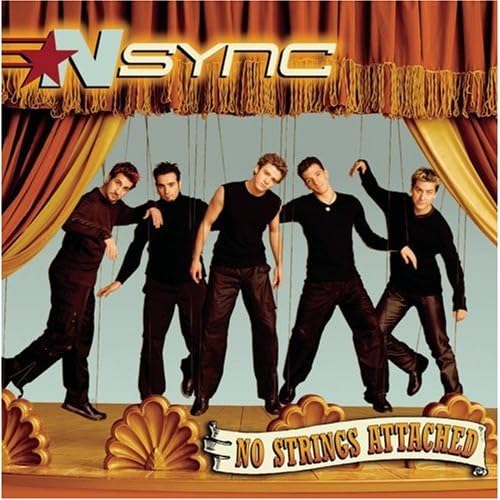
P.S. I thought it was amusing to include two random pictures of attractive people who decided to put their arms up to explicitly (and maybe unintentionally) exponentiate their sex appeal factors.
Also, unrelated but super-hilarious music video! This is "Danger! High Voltage" by Electric Six:
Jack Johnson was a champion boxer who was jailed for 10 months in 1920. Why? Essentially because he dated a white woman, which was against the law back then. He died in 1946 in a car wreck. Oh, he's also black. The reason why Jack Johnson is (re)gaining media attention around now is because there's a movement calling for a (rare) posthumous Presidential pardon to rid him of his "crimes" of interracially-dating.
Really, America? Really?! Johnson died half a century ago. Such a pardon would only be symbolic at best and a waste of time and attention at worst. It seems that in this day and age (in the U.S.), we are constantly walking on eggshells, afraid of offending someone. Several minority groups have risen and created groups just to bitch and whine when some sort of semi-high-ranking public official makes a slight gaffe that honestly unintentionally "discriminated" against a group.
When Saturday Night Live did a parody of New York Governor David Paterson who is legally-blind that may have parodied Paterson's blindness more than his incompetence, Paterson issued a statement saying that the sketch was "third-grade depiction of people and the way they look."
When white police Sgt. James Crowley arrested black Harvard professor Henry Louis Gates Jr, the story gained national prominence and eventually led to President Obama holding a "beer summit" with the two (and Vice President Joe Biden) at the White House to clear the air.
During Senator Hillary Clinton's bid for the Democratic Presidential nomination in 2007-2008, news anchor Chris Matthews apparently made a comment on-air about Clinton that caused many people to cry out "sexist." So much so that Matthews had to apologize for his comment.
The list of examples of political or social faux-pas can obviously go on and on and on. The common thread occurring through these stores and others of a similar fashion is the need to want to "make amends" for doing something that sort of offends a minority group. Is that really necessary? Can't that group just accept that someone is bigoted against them?
It just seems that we're (un?)intentionally creating an atmosphere that fosters hostility. Do we really need to be made aware of all the linguistic loops and jumps that we need to go through before saying anything, to prevent seemingly-attacking a group (or groups) of people? There are just so many layers of political correctness that exist nowadays. I mean, there are classes you might have to take that go over these issues (classes you need to take for a job, a program, school, etc....).
Anyway, just some scattered thoughts....
Unrelated, but I find this music video hilarious. It's "Jesus Is My Friend" by Sonseed:
"I'm not a racist. I have piles and piles of black friends." This a quote from Keith Bardwell, justice of the peace in Tangipahoa Parish in Louisiana. As reported in the news Thursday of this week, Bardwell denied a white woman and a black man a marriage license because he does not believe in interracial marriage because he feels children from such a union will be adversely affected through being biracial.
The obvious reaction I should be having is as follows: What the fuck, Bardwell? This is clearly racial discrimination. What the hell were you thinking? Why are you still defending your actions as if you're in the right days later after this story has not only gained national attention but also the disavowal of several high-ranking public officials?!
However, I am choosing to only focus on Bardwell's quote that I began this blog entry with. Of course, my reaction still remains the same: What the fuck, Bardwell?!
This (il)logical qualification has frequently been used to justify a discriminatory stance on something. "I just don't believe in gay marriage. I'm not homophobic though; I have a gay uncle." "I'm not entirely sure the Holocaust actually happened. I'm not an anti-Semitic though; I mean, I have Jewish friends." "Is it really the rapist's fault? That woman was just asking to be raped with her scantily-clad dress in the workplace. I'm not a sexist pig though; I love women." (Okay, so this last one is a stretch, but I think my point shines through.)
I cringe every time I hear something like this. Why would you think you need to qualify your statement by saying you know people who are so-and-so? The only reason I can think of is because you're afraid that what you just said was fucking bigoted. And how else can you quickly qualify such bias with your tiny, close-minded brain? Oh, that's right: mention that you know someone who is black/gay/Jewish/female/whatever. I mean, do you think people live in bubbles where there only exists people who are exactly like themselves and the fact that you know people who aren't exactly like yourself will astonish people? If so, please wake the fuck up.
Honestly, I can't comprehend how mentioning your social network adds to your argument or even begins to justify anything at all aside from the notion that you know such people. Unless you're trying to socialize with me, I don't care that you know person X, Y, or Z. If you don't think your perspectives, knowledge, and stances can speak for themselves through your words (logical structures, rhetoric style, vernacular, etc.), then what you're saying is full of shit. That's it. I don't know what else to tell you.
My name is Timmy, and I think close-minded people should go fuck themselves so that they will die out through inbreeding. But it's perfectly okay for me to say these things; I have friends know people who are incompetent idiots.
EDIT: Picture of Bardwell!
Unrelated, but I highly recommend bluegrass group Nickelcreek. Here is "When in Rome":
My taste for people who say they're "too busy" or "don't have time" is slowly but steadily and surely declining. I've expressed my distaste before (although I've made an exception for those exceptional [lol! at the exception/exceptional word play here] individuals who are working multiple jobs, doing the school thing, socializing amazingly well, and running a small country on the side). Honestly, I think such people just have poor time management skills and don't want to admit it--because in admitting it, it would somehow be a failure or something.
My reasoning for this rant isn't necessarily of personal concern (although there is indubitably some personal appeal) but rather of a broader conceptualizing of "relationships." I haven't watched many movies or television shows as of late, but I've seen enough both now and in the past to notice a particular pattern regarding the dating world: people want to be "in the same place" and be "free" to pursue a relationship without having personal, work-related, or other hangups. This "phenomenon" isn't restricted to just movies/television and extends to the "real world" as well. Of course, my question at this point is ... why the fuck should that be the case?
I mean, we do empirically see some sort of societal symptom of this: the average age of marriage for both men and women has increased steadily in the past 50 or so years from the lower 20s to the upper 20s (at least in the U.S., this is the case ... although it's the case in many developed or otherwise nations as well). We also see increasing average ages over time for bearing/fathering children. The predominant rationale behind this is generally that more people are going to school or putting "career first" before venturing out into the dating market to find a mate/spouse and "settle down" (as if marriage/family is a "settling" matter). This reasoning makes sense at a surface level, but going just two inches deeper, we have to ask a very probing question: are people today really that much more busier than people in the past? Or could there be some other reason for the increases in the average ages of marriage/bearing children/almost everything else? Obviously, I don't know the answer to this, but I do have my own personal speculations. I think that it *could* boil down to cultural shifts ... that is, cultural shifts toward that of a more self-egocentric nature. The notion that "the world revolves around me" may never have been increasingly truer the closer one gets to the current time. Paradoxically, in the past decade, the generation growing up has also been forced to be more worldly ("caused" by events such as 9/11, the southeast Asian Tsunami, the formation of the EU, the rise of China, etc etc etc).
At the individual level, there really shouldn't be any of the "I'm just really busy" or "I don't have time for a relationship" or "We're just not at the same place" bullshit. Firstly, everyone is busy. That's life. If you're not busy, you should be because you're probably a loser and making absolutely nothing of your life. (Harsh but undeniably true.) Secondly, when the fuck are you going to even have time for a relationship? Are you planning to set aside "relationship time" when you're single for the off-chance that a relationship comes up and fills that void? If so, what do you say to your friends? "Oh, sorry, we can't hang out tonight because it would take up some of the time I've set aside for a relationship that I'm NOT currently in but want to be in"? The corollary to this is the "I'm not looking for a relationship now." Is a relationship supposed to be something you're on the look-out for ... like keys or a lost puppy? If relationships tend to work like this for you, PLEASE give me some tips; I'd appreciate it greatly. The third outlook I gave is also completely illogical. How can two people with usually-completely-different lives ever be in exactly the same place and time? "I'm sorry, but I just don't like you as much as you like me" or "I think I like you more than you like me" are both crazy-talk. Shouldn't the fact that you both like each other be enough? It seems to me that the case that two people like each other EXACTLY the same amount is virtually impossible. If two people like each to varying amounts, then perhaps dating/relationshipping will increase the amount of liking of the lesser-liking person. If not, then how the hell else would you figure this out? Playing the incredibly-inaccurate guessing/hypothesizing game? Furthermore, I don't think I know anyone who is "in the right place" for a relationship (of course, this could be due to the fact that I'm a young adult). If someone says that he/she isn't in the right place for a relationship and you ask him/her when is a good time, they very-often will not be able to answer that question. But I can give a pretty clear answer: they will never be ready; they are one of those people who always wants things to be just "perfect," essentially setting up any- and everything up to fail because things "just won't be right." There's a country song (I know, I'm sorry) called "Perfect" by Sara Evans whose lyrics say, "Baby, every little piece of the puzzle doesn't always fit perfectly / Love can be rough around the edges, tattered at the seams / But honey, if it's good enough for you / It's good enough for me-eee-ee." I almost couldn't have put it better myself.
Anyway, I wanted to end on this note: You're not that busy. Get over yourself. If you think you are, your priorities are probably all sorts of messed-up.
Mostly unrelated, but I recommend Nosaj Thing's "Aquarium":
That's right. I was a big fan of the late-'90s/early-'00s bubble-gum pop music explosion, and I still am. I still somehow know the lyrics to so many songs from back in the day that it's not even funny. The list of artists include, but is not limited to, the following: 'N Sync, Backstreet Boys, Spice Girls, Christina Aguilera, Britney Spears, Jessica Simpson, Mandy Moore, 98 Degrees, LFO, and BBMak. For the past three hours, I have been youtubing various songs from this era and singing them. Passionately. Right now, Sugar Ray's "Every Morning" is on.
A decade ago (holy shit! a fucking decade!), I remember actually hiding my fondness for pop songs from my peers and fellow classmates for fear of ridicule and humiliation. If I share such affinities now? A flood of reminiscing stories flows forth from childhood memories. It's bizarre and intensely interesting how/why this occurs. Maybe I just didn't have the right social circles.
Pop music that captures pre-teen and teenage attention is incredibly influential, I think. It may not appear like it at the time since top music critics and other adults will scoff at the over-commercialization and shallowness of much of the more-successful pop music. But the important thing to keep in mind is that the sector of the population that such pop music caters towill become the said adults themselves in a matter of time. Not only that, but the young population is being captivated at a highly-impressionable time in their lives. As such, it would be interesting (though probably impossible) to see if a generation would be grow up differently had it grown up listening to the pop music of a previous or later generation.
Furthermore, pop music, I think, really does unite people to a certain extent. If I (as a native Texan who grew up in Texas) meet someone who grew up on the west or east coast, we may not share very similar backgrounds due to slightly or vastly different school systems, neighborhoods, and local culture, but we sure as hell will have common ground as far as national pop music/culture of yester-decade goes.
I feel like I'm rambling around a lot. What I'm trying to say is that while pop music can easily be scorned critically musically, pop music (and culture) actually have far-reaching implications for the people affected/listening to it and for society and culture at large. I want to elaborate further, but I might try to legitimize my ideas at a later point in time with some sort of research or evidence, so I'm going to spare you, my dear reader(s).
In the meantime, here is a list of other essentially one-hit-wonder songs from the late-'90s/early-'00s that I also found/find enjoyable:
Dream - "He Loves U Not" and "This is Me"
3LW - "Playas Gon' Play"
O-Town - "Liquid Dreams," "All or Nothing," and "We Fit Together"
Soul Decision - "Faded" and "Ooh, It's Kinda Crazy"
Len - "Steal My Sunshine"
Crazy Town - "Butterfly"
Hoku - "Another Dumb Blonde"
Samantha Mumba - "Gotta Tell You" and "Baby, Come on Over"
S Club 7 - "Never Had a Dream Come True"
Mostly-unrelated: Here is the song "Why Do You Let Me Stay Here?" by She & Him, an indie folk duo consisting of Zooey Deschanel and M. Ward. I'm not necessarily digging the song, but the video is amazingly cute ... as is Zooey Deschanel.
People with bigger shoe sizes have, on average, higher IQs. In a large representative population, this is absolutely true. But does this mean that smart people have big feet? Or that small-footed people are stupid? This "statement" is often-used in statistics courses when showing that correlation does not necessarily mean causation. The reason that people with larger shoe sizes have higher IQs is that as people age and get older, their feet grow, as do their knowledge bases. So it's not that X causes Y or Y causes X but rather Z causes both X and Y, two otherwise-unrelated variables.
With this concept in mind, let's explore education. We always hear how higher-educated people have substantially higher starting salaries, higher median incomes, and higher wealth-accumulation abilities. Therefore, we have this notion in which we feel that if we go to college and get degrees, we will have better incomes. But is this really the case? Brace yourself because I'm going to blow your mind (or, at least, my mind was blown--BLOWN--when I learned about the following theory that I will attempt to detail).
People think that they go on to higher education (undergraduate, graduate, doctorate, law school, med school, etc.) to advance their careers, gain knowledge and a better understanding of the world, and have higher starting salaries when they embark on their chosen career path. But what they are actually doing, though, is signaling to employers that they are high-productivity individuals. That is, because they went on from high school to pursue higher education, they are much more likely to be highly-productive than those who decided they were finished with education with just a high school diploma.
For example, taking a step downward on the education ladder, people with high school diplomas obviously have higher median incomes than high school dropouts. However, we are led to believe that high school diplomas and GEDs (general educational diploma or general equivalency diploma) are about the same and that people with one or the other have similar incomes (since "high school diploma" and "high school equivalent" are almost always grouped together). But what do we see when we make GED its own category? How would its median income look compared to that of high school dropouts and to that of high school diplomas? Interestingly enough, the median income of GEDs is closer to that of high school dropouts than to high school diplomas. So we are forced to determine why this is the case. To unravel this conundrum, we need only look at the population of people who have high school diplomas, who are high school dropouts, and who get GEDs. The characteristics of people with GEDs more closely resemble the traits of dropouts. Now why did I just overly-inform you about the financial statuses of high school equivalents and dropouts? Going back to my contention that education does not determine future income, we see that even though GEDs and high school diplomas should be on-par with one another, the income level of each group is vastly different. People with high school diplomas stick it out for 4 years, while people who received GEDs basically dropped out for reasons probably akin to the reasons high school dropouts leave school. We see here that high school serves as a filter between the "more-productive" high school diploma people and the "less-productive" GEDs and high school dropouts. So getting that GED will not necessarily put you on the same income level as that of high school diplomas because people with diplomas don't make more income necessarily because they have more education but instead because by finishing high school, they have signaled that they (on average) are more productive individuals. And it is in being more productive that people gain more income and potential for upward movement in the workplace, both positionally and financially. It is not solely due to more education.
Bringing back higher education into the picture, we see a parallel to the high school case in that people who finish a 4-year degree being more likely to be "high-productivity" people than those who are college dropouts or finish 2-year degrees. Likewise, 4-year degrees are likely to be "less-productive" than masters degrees, professional degrees, and doctorate degrees.
So essentially, education serves as a filter for high-productivity people. Much in the same way that panning for gold separates the gold from the dirt/rocks/pebbles, education separates high-productivity people from low-productivity people. Therefore, it's not that getting more education will garner higher salaries; instead, it's that the people who naturally would want to get more education are likely to be more-productive and thus better-suited to advance economically in the workplace.
Ergo, more education does not necessarily cause higher income. Instead, being a high-productivity person could cause one to want to go on to higher education and to be professionally-efficient (causing one to be much more likely to get raises or promotions). I say "could cause" because there are always exceptions, such as highly-productive college dropouts like Bill Gates or Michael Dell. It's not a "fit-all" standard, of course, but it's definitely a "fit-most" rule.
By the way, this economic theory is part of the Signal Model. Your level of education signals to firms looking to hire you if you're a high-productivity or low-productivity person since they can't know how productive you may be until years down the line. Education simply serves as one of the signals firms can use to determine your potential capacity. So if you have a lot of high-productivity signals, you're probably more likely to be hired because you have better potential to produce more output for the firm over the length of your career with them.
NOTE: My apologies for the sucky pictures; recommendations to replace them are welcome! :-D Also, the chart picture isn't the ideal example I was trying to find of GED versus high school diploma, but it is extremely difficult to find something that is. If I find something better, I will be replacing it at will. Thanks!
Unrelated, but I'm currently listening to a cover of Bob Dylan's "Boots of Spanish Leather" by Tyler Hilton (and Alexa):
Democracy is such a grand idea in theory. I mean, it's "power to the people"! How can "majority rule" not do no wrong?! (My apologies to people who have trouble comprehending the negation of negatives. My advice? Learn almost any other language. Double-negatives are not grammatically-incorrect in several non-English languages.)
In America's case (since I can't claim to know much about how democracies in other nations work), the short answer to why democracy fails: lobbyists and minority groups. Well, maybe "fail" is too strong a term; let's go with "inefficientiates," that is, a pseudo-verb form of "inefficient."
The origin of lobbyists is admirable, I'm sure, but in today's atmosphere, I'm very much not too confident that lobbying is all that "respectable" any longer. There's an urban-legend-like story of lobbying originating during President Ulysses S. Grant's terms in the 1870s. Because smoking was not allowed in the White House, President Grant would saunter over to the nearby Willard Hotel and smoke his cigars in the hotel lobby there. Eventually, it became known that President Grant frequented the lobby, so people wanting some Presidential influence would come to see him in the hotel lobby. Of course, the actual start of the term "lobbying" was in the U.K. in Parliament and the House of Commons, with "lobbying" occurring in the U.S. even before the Grant administration. But those stories aren't as fun as the Grant story, so I'm not going to share those.
Over time, lobby groups developed, with some having more influence than others over Congress and such. How do they have more influence? Perhaps long histories with particular political parties, allegiances that may be difficult to break. Or maybe there are corrupt "deals" going on. Also plausible is that a good number of the "majority rule" people simply like the leader of a lobbyist group. Whatever the reason, lobbying undermines the basic ideals of democracy: rule by the people. Lobbyists have essentially changed the American democratic field to rule by a few passionate people. Don't get me wrong; it's admirable to be passionate about a political issue. However, when laws/bills/whatever are getting pushed based ultimately solely to just these passionate people, then what the hell happened to majority rule or rule by the people?
Also of issue to me about democracy is its "majority rule" axiom. I mean, majority rule makes sense in small settings. For example, if a group of friends and I were trying to decide where to go eat, majority rule makes sense. It'll make most of us happy. But on a national scale? A lot of fucking people are going to be marginalized, and we're talking millions here. I mean, if you think about it ... ideally, all it takes is 50.01% of the population to approve something, and it would be law. What about the other 49.99%? Their voices are lost. (Of course, here enter lobbyists again....)
So in America, white people comprise 66% of the population (in 2006). Majority rule, right? Therefore, who the fuck cares about the other races? If the white people can stick together, say goodbye to your rights, blacks, Hispanics, Asians, Native Americans, etc. (Interestingly, in both houses of Congress, the two leading political parties tend to stick together within themselves too. They really shouldn't. If everyone were able to decide for their own stances on issues instead of blindly following whatever is the "Republican" or the "Democratic" option, maybe our government would be better.) Perhaps I'm missing something here, but I don't like "majority rule by the people."
Of course, although it may not be a great system/process, democracy is the best we have--as far as appeasing the most people. We should just revert to authoritative dictatorships. I mean, if a lot of people are going to be unhappy, we might as well all be unhappy (except for the happy dictator).
 but where is the cheese?
 Dear hot people,
 Obviously, the list of "hot" advantages could go on and on.